-
Welcome to submit your products to the Media module of Open Lighting Product Directory (OLPD). OLPD editors work free of charge to review your submissions and add the approved product listings to appropriate OLPD categories for lifetime exposure. To be able to make a submission and get it approved, please read this guide.
Smart Street Lights



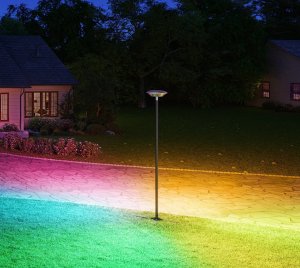

The concept of smart street lighting represents an advanced application within the broader context of urban infrastructure, where traditional street lighting systems are transformed into dynamic networks capable of interaction and autonomous operation. Smart street lights are equipped with sensors and local controllers that collect data from their environment. This data might include light levels, motion detection, weather conditions, and even traffic patterns. These lights are connected to central management systems as well as potentially to personal devices like smartphones and tablets through various forms of network connectivity (e.g., Wi-Fi, cellular networks, or dedicated IoT networks like LoRaWAN). This allows for two-way communication between the light fixtures and the management system or end users. Initially, the idea of smart lighting centered around adaptive lighting—automatically adjusting the intensity of light based on real-time environmental data. For example, street lights can dim late at night when traffic decreases or brighten when sensors detect pedestrians or vehicles. Beyond simple adaptability, smart street lights can implement complex control algorithms that predict lighting needs based on historical data and real-time inputs. This might include adjusting lights in anticipation of specific events or conditions rather than merely reacting to them. Modern smart street lights offer functionalities that surpass simple on/off and dimming capabilities. They can interact with users directly or indirectly. For instance, a light could increase brightness as a pedestrian approaches based on the signal from a smartphone app, or provide emergency alerts and guidance. Smart street lights vary in their level of intelligence and capability. Some might have basic connectivity and context awareness, while others are equipped with advanced processing capabilities to handle complex tasks locally, without needing to communicate back to a central system for every decision.
The rapid evolution of the smart lighting market is largely driven by advancements in LED technology, which fundamentally changes how light can be controlled and integrated into broader system architectures. LEDs are solid-state devices that create light through the recombination of electrons and holes within a semiconductor material. Unlike traditional lighting, such as incandescent or gas discharge lamps, LEDs do not rely on heating an element or ionizing gases to produce light. This solid-state nature leads to more efficient and controllable light sources. LEDs inherently allow for fine digital control over their output. This means they can be dimmed effectively and can endure frequent switching without degradation, unlike gas discharge lamps which have limited dimmability and lifecycle when subjected to frequent on/off cycles. These characteristics make LEDs ideal for dynamic control systems that adjust lighting based on real-time data inputs. Due to their solid-state nature, LEDs integrate smoothly with other semiconductor devices. This compatibility is essential for incorporating sensors, processors, and communication hardware directly into lighting fixtures. Such integration facilitates the creation of intelligent lighting systems that can adjust based on environmental conditions, occupancy, time of day, and other factors. The ability to integrate control technologies into LED lighting solutions has led to a digital transformation in the lighting industry. Smart street lighting systems, which are a part of this transformation, exhibit enhanced controllability, adaptability, and connectivity. These systems are not only more energy-efficient but also contribute to smarter, more responsive urban environments. LED technology's efficiency, controllability, and compatibility with digital technologies are the main drivers behind the shift towards smart lighting systems. These systems exemplify a significant advancement over traditional lighting, providing both operational efficiencies and a platform for integrating with future smart city technologies.
Modern LED street lights can incorporate a variety of sensors and control systems that enable more than basic illumination. For instance, motion sensors can adjust lighting based on the presence or absence of people or vehicles, which is particularly useful in areas with variable traffic patterns. Photocells can adjust the brightness of the lights based on the natural light available, maximizing energy savings through daylight harvesting. By building intelligence directly into LED luminaires, the systems gain the ability to make decisions based on the data received from onboard sensors. This embedded programmability allows for the automation of lighting control, such as adjusting light levels based on environmental conditions, time of day, or specific events. While individual smart street lights are capable of operating autonomously to a certain degree, the true potential of these systems is realized when they are interconnected. Communication between street lights allows for a scalable, networked system where data can be shared and decisions can be made in a coordinated way across many lights, rather than in isolation. This network connectivity is crucial for creating smart urban environments where street lighting adapts dynamically to both global and local changes in conditions. The integration of LEDs, sensors, and communication technologies forms a digital ecosystem where each component enhances the capabilities of the others. This interconnected system not only improves the energy efficiency of each street light but also contributes to broader smart city initiatives. For example, data collected from street lighting can be used for urban planning, security, and emergency response purposes. By combining solid-state lighting with digital technologies, cities can not only save on energy costs but also gain new tools for managing and improving urban life. This transition from isolated light fixtures to interconnected intelligent systems reflects a broader trend in technology towards greater integration and smarter, more responsive environments.
Smart lighting systems exemplify how digital technologies can be applied to traditional infrastructure to make it more efficient, responsive, and adaptable to both environmental conditions and human needs. These systems not only improve lighting management but also contribute to broader smart city goals, such as energy conservation, improved public safety, and enhanced urban living. Smart lighting systems, often referred to as connected lighting, rely fundamentally on network connections. This connectivity enables the lights to be managed remotely and collectively, rather than individually and manually. It is what distinguishes smart lighting from traditional systems. With networked smart lights, control can be centralized, meaning that a single controller (or multiple controllers in different locations) can manage all connected lighting fixtures. This controller could be a physical device or software accessed via smartphones, tablets, or computers, allowing adjustments and monitoring from virtually anywhere. By connecting street lights into a computer-controlled network, their operation can be synchronized across a whole system. This connectivity allows for the efficient coordination of lighting levels, operational times, and response strategies across an entire network, improving both energy use and light management. Smart lighting systems are equipped with sensors that collect various types of data, such as light levels, motion detection, and energy use. This data can be sent back to a central management system (CMS) for analysis, helping to optimize the lighting schedule and intensity based on real-time and historical data. Additionally, information can be exchanged between lights (nodes) within the network, enabling adaptive responses to local conditions. The CMS acts as the brain of the networked lighting system. It is a software platform that provides a user-friendly web-based interface accessible from both desktop and mobile devices. The CMS can be hosted on cloud servers (allowing remote access over the internet) or on local on-premises servers. The network connectivity of smart street lights allows for remote operation, including real-time adjustments to lighting schedules, dimming features, and emergency responses. Advanced features can be executed remotely, enhancing operational efficiency and reducing costs associated with manual interventions. In the network architecture, gateways play a crucial role as intermediaries between the CMS and the individual lighting controllers. They handle data coordination and communication translation, ensuring that messages and commands are passed accurately and promptly between the central system and the street lights. Gateways can operate over both wired and wireless connections and handle different communication protocols.
The structure and technology choices in connected street lighting networks are designed to maximize efficiency, reliability, and adaptability, leveraging bidirectional and mesh networking to create robust systems capable of supporting smart city infrastructures. Connected street lighting networks can send and receive data, allowing for real-time control, monitoring, and data collection. This bidirectional communication is crucial for adaptive lighting control and system diagnostics, facilitating responsive and dynamic management of street light operations. Technologies like Power Line Carrier (PLC) and Ethernet are used in wired setups. PLC uses existing power lines for data transmission, reducing the need for additional wiring. Ethernet provides a reliable and high-speed connection, often used for connecting devices that are not limited by battery life. For wireless communication, a range of technologies are employed, particularly in the radio frequency (RF) spectrum. Long-range RF communication technologies include NB-IoT, LTE-M, LoRa, Sigfox, and Ingenu, which are suitable for widespread urban or rural areas, offering various ranges, bandwidths, and energy efficiencies. Technologies like ZigBee, Z-Wave, Thread, and Bluetooth Mesh are specifically designed for low-power, short-range communication within mesh topologies. These technologies are ideal for street lighting systems, where nodes are numerous and dispersed across large areas but need only communicate over relatively short distances. Preferred for street lighting, mesh networks allow nodes to connect with multiple other nodes within their range, creating a network with no single point of failure. This configuration enhances reliability and resilience, as the network can reconfigure itself to maintain connectivity if any single node fails or a path is blocked. Mesh networks are highly reliable due to their ability to reconfigure and reroute data through different paths in case of node or connection failures. Adding new nodes to a mesh network is straightforward, as each new node only needs to connect to a few nearby nodes rather than to a central hub. Multiple pathways for data transmission in mesh networks create redundancy, further enhancing the network's robustness against failures. Mesh networks can automatically detect and bypass failures, dynamically adjusting the network paths to maintain consistent service.
The integration of Internet of Things (IoT) technology into street lighting systems transforms these fixtures from mere illumination devices into smart city hubs that can support a range of innovative applications, thereby enhancing urban living and operational efficiencies. Traditionally, Internet Protocol (IP) communication was limited to computers and smartphones. IoT extends this communication to street lights and other connected devices that may have limited processing power and energy resources. This extension is crucial for creating a cohesive and interoperable network that includes various types of devices. By integrating street lighting systems with the Internet, these systems can leverage ubiquitous connectivity to enhance their primary function—illumination—while also serving as nodes in a larger network of city infrastructure. This connectivity enables the collection and exchange of data in real time, enhancing the ability to manage and optimize city services. Connected street lights can collect a vast amount of data from their environment, such as traffic patterns, weather conditions, and pedestrian counts. This data can be shared with other devices and used to provide contextual services like dynamic lighting adjustments based on current street usage or environmental conditions. IoT technology provides a structured framework that facilitates not just device management—including remote monitoring, configuration, and troubleshooting—but also the deployment of new services such as emergency notifications or traffic congestion alerts. The ubiquitous nature of street lighting makes it an ideal platform for deploying a network of digital nodes across a city. These nodes can support a wide array of services beyond lighting, including traffic management, smart parking solutions, environmental monitoring, EV charging stations, and public safety measures. At the heart of this system is the IoT platform, which acts as the central orchestrator for managing the data flow between devices (the street lights and associated sensors) and applications. The platform comprises software components that handle various tasks such as data processing, device management, application integration, and security. This platform ensures that data from street lights can be efficiently processed and utilized, and that the devices themselves can be effectively managed and secured.