-
Welcome to submit your products to the Media module of Open Lighting Product Directory (OLPD). OLPD editors work free of charge to review your submissions and add the approved product listings to appropriate OLPD categories for lifetime exposure. To be able to make a submission and get it approved, please read this guide.
Landscape Path Lights
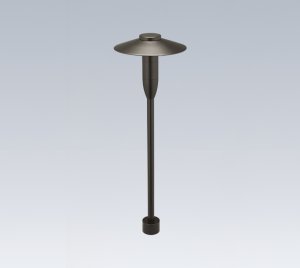


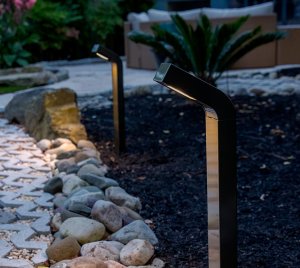
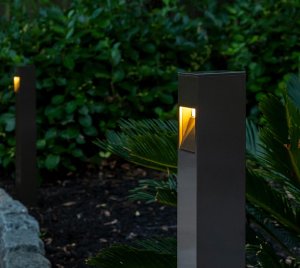
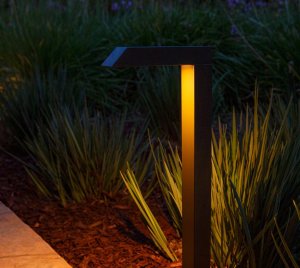
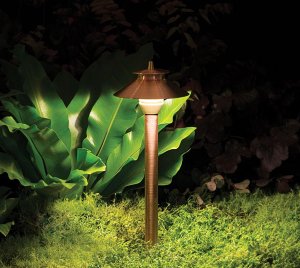




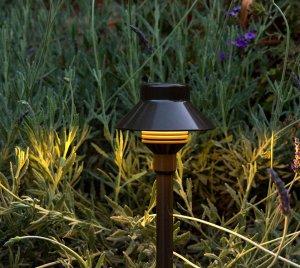



Path lighting is like the gentle hand that guides you through a garden or along a pathway at night. It's not just about visibility; it's about transforming your outdoor space into a seamless extension of your home, enhancing its beauty and functionality even after the sun sets. By strategically placing lights along pathways and key landscape features, you create a magical atmosphere that invites you to explore and enjoy your outdoor environment long into the evening. Imagine strolling through your garden under the soft glow of pathway lights, with delicate flowers and foliage illuminated in just the right way to showcase their beauty. It's not just about seeing where you're going; it's about experiencing the landscape in a whole new light, quite literally. Path lighting isn't harsh or overpowering; it's subtle and artful, enhancing the natural contours of your outdoor space and creating a sense of depth and dimension. But path lighting isn't just about aesthetics; it's also about practicality and safety. By strategically placing lights along pathways, you create pools of light that not only help you find your way but also make you feel safe and secure in your outdoor space. Whether you're navigating a winding garden path or simply enjoying a quiet evening on your patio, path lighting ensures that you can do so with ease and peace of mind.
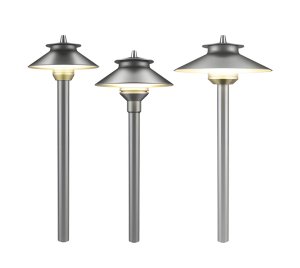
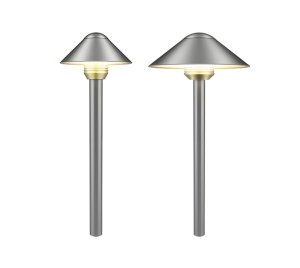
A path light is a subtle yet essential fixture in outdoor lighting design. It's typically a low-level light mounted on a stem, often with a protective hat or shield on top. This design serves multiple purposes: it reflects light downwards while also distributing it horizontally, creating a soft, glare-free illumination that forms a circular pool of light on the ground below. The primary function of path lights is to guide people safely along pathways to the entrance of a home or other outdoor spaces. At the same time, they highlight nearby groundcover, shrubs, or flowerbeds, adding to the aesthetic appeal of the landscape. When installing path lights, they are typically positioned on either side of the walkway, alternating from one side to the other. Care is taken to ensure that the spacing between the fixtures is appropriate to prevent overlapping beams of light, while also avoiding the creation of shadows that could hinder visibility. Path lights are designed to withstand outdoor conditions, often constructed from durable materials such as brass, aluminum, or polyester composite. The stem of the light fixture usually comes with a stake, which serves to stabilize the light when inserted into the ground.
Path lights are not just about functionality; they're also an opportunity to enhance the aesthetic appeal of your outdoor space. With a wide variety of designs, styles, and finishes available, path lights can be more than just sources of illumination—they can be statement pieces in their own right. Many path lights feature ornate fixtures that add a touch of elegance and sophistication to the landscape. These fixtures may include intricate designs, patterns, or sculptural elements that catch the eye and elevate the overall ambiance of the outdoor environment. Some path lights go beyond mere functionality and incorporate artistic elements into their design. They may feature patterns or shapes that create captivating light patterns and shadows when illuminated. These artistic touches add depth and visual interest to the pathway, transforming it into a dynamic and visually stimulating feature of the landscape. When selecting path lights, it's essential to consider how they will harmonize with the broader design theme of your outdoor space. Whether your landscape design is contemporary, traditional, rustic, or modern, there are path lights available to complement and enhance your chosen aesthetic. By choosing path lights that complement other outdoor elements such as architectural features, plants, or hardscapes, you can create a cohesive and visually appealing outdoor environment.
LED technology has revolutionized outdoor path lighting in numerous ways, offering a host of benefits that were not achievable with traditional light fixtures. Firstly, LED path lights are exceptionally energy-efficient, consuming significantly less power than their traditional counterparts. This efficiency allows them to operate for extended periods throughout the night without causing a significant spike in energy consumption. Additionally, LED lights boast an extended lifespan compared to traditional bulbs, resulting in reduced maintenance costs and less frequent replacement. This not only saves money but also minimizes disruption to outdoor spaces due to maintenance activities. LED technology also opens up a world of design possibilities for path lights. Designers can experiment with various shapes, sizes, and colors, thanks to the flexibility of LED components. This enables the creation of path lights that not only fulfill their functional purpose but also contribute to the overall aesthetic and visual appeal of outdoor environments. Furthermore, LED lights offer spectral flexibility, allowing designers to explore a wide range of colors beyond traditional white light. This versatility enhances the customization options for outdoor spaces and enables the creation of unique and captivating lighting effects. Moreover, the controllability of LED technology enhances the functionality of path lights, allowing them to incorporate intelligent and smart lighting features. This includes options such as precise directional lighting, dimming capabilities, and dynamic color-changing effects, adding another layer of sophistication and versatility to outdoor lighting design.
An LED path light is a sophisticated lighting solution comprising multiple components working together seamlessly to deliver efficient, reliable, and customizable illumination for outdoor pathways and landscapes. At its core, the LED module serves as the light source, typically consisting of surface-mount device (SMD) LEDs arranged on a printed circuit board or a chip-on-board (COB) LED array. These LEDs provide the illumination necessary for path lighting applications. To shape and direct the light emitted by the LEDs, optics are employed. These may include lenses or reflectors, which help control the distribution and intensity of the light, ensuring it is directed where it's needed most along the pathway. Efficient heat dissipation is essential for maintaining the performance and longevity of LED path lights. The heat sink, integrated with the LED module, facilitates the transfer of thermal energy away from the LEDs, preventing overheating and ensuring reliable operation over time. The housing of the LED path light encloses and protects the internal components from environmental factors such as moisture, dust, and debris, ensuring durability and longevity in outdoor settings. The LED driver is responsible for regulating the electrical current supplied to the LEDs. It ensures a stable and consistent DC current, optimizing the performance and efficiency of the LEDs while extending their lifespan by operating within safe voltage and current limits. Control circuitry manages various functions of the LED path light, such as dimming capabilities, on/off functions, and integration with sensors or smart features. This enables advanced control and customization options, allowing users to adjust the lighting according to their preferences and needs, as well as integrate the path lights into larger lighting systems or automation networks.
LED path lights can be powered in various ways to suit different installation scenarios and preferences. Low-voltage LED path lights operate on a lower voltage typically ranging from 12 to 24 volts. They are powered by a transformer that reduces the standard household voltage to a safe and energy-efficient level for outdoor lighting. Low-voltage systems are commonly used for landscape lighting and offer ease of installation and versatility in design. Line voltage LED path lights operate directly on the standard household voltage of 120 volts. They do not require a transformer and can be connected directly to an outdoor electrical outlet or wiring. Line voltage systems offer simplicity in installation but may require a licensed electrician for proper installation and safety compliance. Battery-powered LED path lights are powered by replaceable or rechargeable batteries housed within the fixture. They offer flexibility in installation as they do not require wiring or access to electrical outlets. However, the battery life will vary depending on usage and may require periodic replacement or recharging. Solar-powered LED path lights utilize photovoltaic panels to convert sunlight into electrical energy, which is stored in rechargeable batteries integrated into the fixture. These lights are completely independent of the electrical grid, making them easy to install and environmentally friendly. They automatically turn on at dusk and turn off at dawn, relying solely on solar energy to operate.